
They Eventually Come for Everyone
The Pentagon’s faith-list purge is a warning: when any group’s rights become negotiable, everyone’s rights are at risk.

Immigrants. Transgender people. Black and brown communities. Women who refuse to submit. Professors. Journalists. Judges. Protesters. Federal workers. Human rights lawyers. Churches that shelter migrants. Clergy who preach mercy too loudly.
Now the Pentagon has given us another warning.
When the State Decides Whose Faith Counts
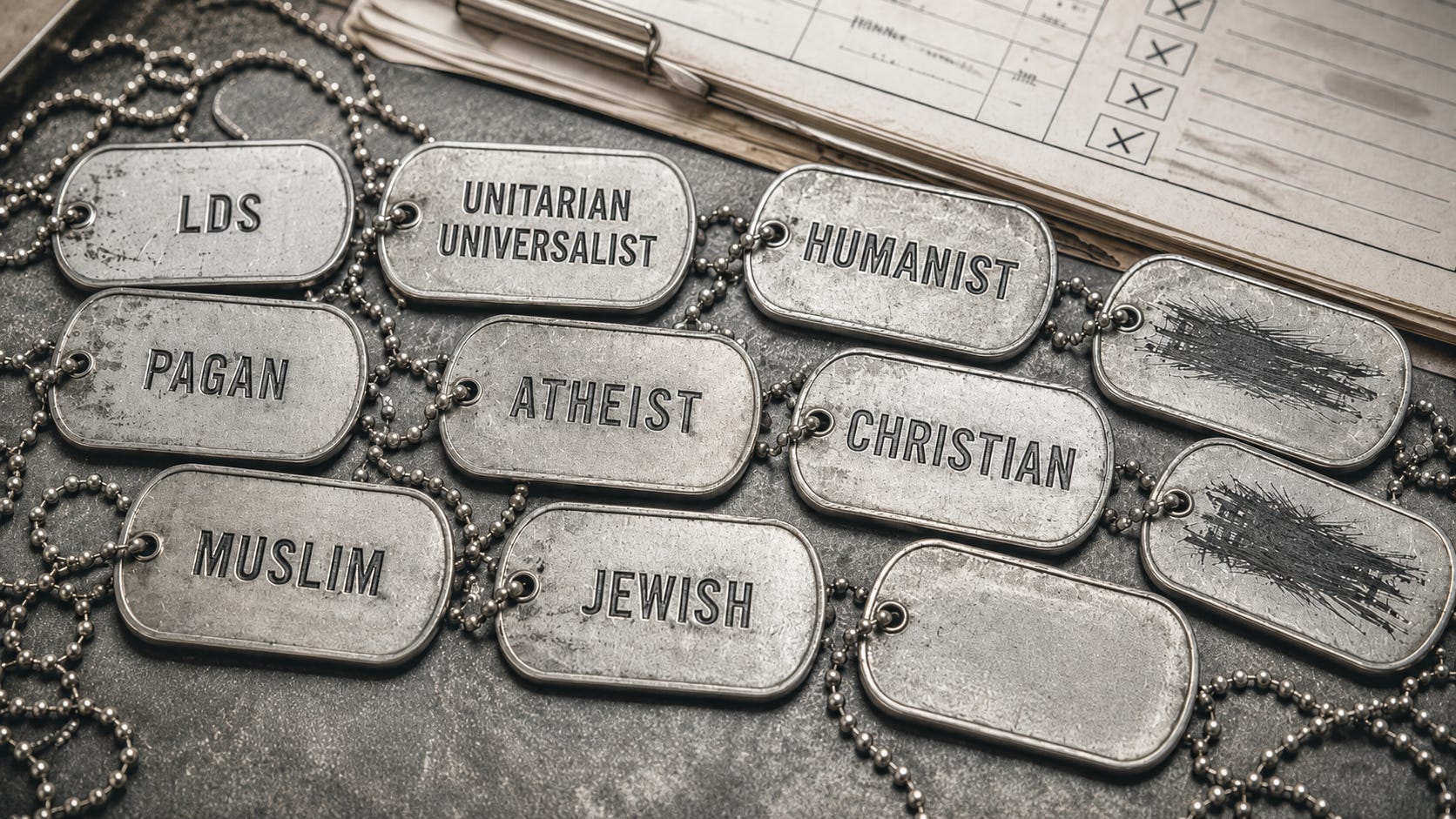
Under Defense Secretary Pete Hegseth, the Department of Defense has reduced its list of recognized religious affiliations for service members from more than 200 to just 31. Unitarian Universalists are gone. Humanists are gone. Atheists, pagans, Wiccans and many others are gone or collapsed into broader categories. The Church of Jesus Christ of Latter-day Saints — a deeply rooted American religious tradition with many conservative members, many veterans and many reliable Republican voters — was not listed as its own Christian denomination in the way many LDS leaders and Utah Republicans expected.
That should stop us cold.
Because this is how it works. First they come for the people the public has been trained to ignore or fear. Then they come for the people who thought they were safe.
A threat to anyone’s rights is a threat to all rights. A government that can decide which faiths count can eventually decide which consciences count. A movement that can strip protections from one vulnerable group can use the same logic against another. A politics that teaches us to accept the dehumanization of our neighbor will not stop at the edge of our own community.
That is why all Christians should be concerned. Progressive Christians should be concerned. Moderate Christians should be concerned. Conservative Christians should be concerned. Secular people should be concerned too.
The issue is not whether the Trump administration likes religion. It clearly likes religion when religion serves power. What it cannot tolerate is independent faith.
The Trump administration clearly likes religion when religion serves its interests. It likes religion when it blesses cruelty as strength, exclusion as order, domination as masculinity, and nationalism as faithfulness.
What it cannot tolerate is independent faith. It cannot tolerate churches that say immigrants are made in the image of God. It cannot tolerate bishops who say mass deportations violate human dignity. It cannot tolerate Christians who insist that transgender people are beloved. It cannot tolerate Jewish, Muslim, Sikh, Hindu, Buddhist, humanist, Unitarian Universalist, pagan, atheist or agnostic service members who complicate the fantasy of a single “Christian nation.” It cannot tolerate any moral community that reminds the state it is not God.
That is why this Pentagon story matters.
It would be easy to dismiss it as an administrative change. A form. A database. A military personnel code. It is something more than that.
The Authoritarian Playbook
Authoritarianism often advances through bureaucracy. It moves through categories, checkboxes, eligibility rules, grant requirements, disciplinary procedures, visa policies, school guidelines, and personnel codes. It does not always arrive with a dramatic announcement. Sometimes it arrives as a quiet narrowing of who is named, who is counted, who is served, and who is protected.
For Unitarian Universalists, this is not a small thing. UUs have long stood in the stream of religious pluralism, civil rights, LGBTQ equality, reproductive freedom and immigrant justice. They are precisely the kind of faith community authoritarian religion finds inconvenient: deeply moral, often progressive, and unwilling to confuse faithfulness with obedience to the state.
For Latter-day Saints, the warning is different but just as serious. Many LDS voters have been part of the Republican coalition for generations. Many are culturally conservative. Many have supported politicians who promised to defend religious freedom. Yet when the machinery of religious narrowing began to move, even they discovered they could be diminished by it.
This is very revealing.
Christian nationalism does not protect Christianity in its fullness or diversity. It protects a political project. Any faith tradition that refuses to serve that project can be reclassified, marginalized, or erased.
Today, it is Unitarian Universalists, humanists, pagans, Wiccans, and Latter-day Saints who see how arbitrary the categories can become.
Tomorrow it could be Catholics defending migrants, Methodists blessing same-sex couples, Presbyterians protesting authoritarianism, Baptists opposing political violence, evangelicals refusing to baptize cruelty as strength, or any congregation that says no when the state demands religious cover for injustice.
They eventually come for everyone because the project was never really about protecting faith. It was about controlling it.
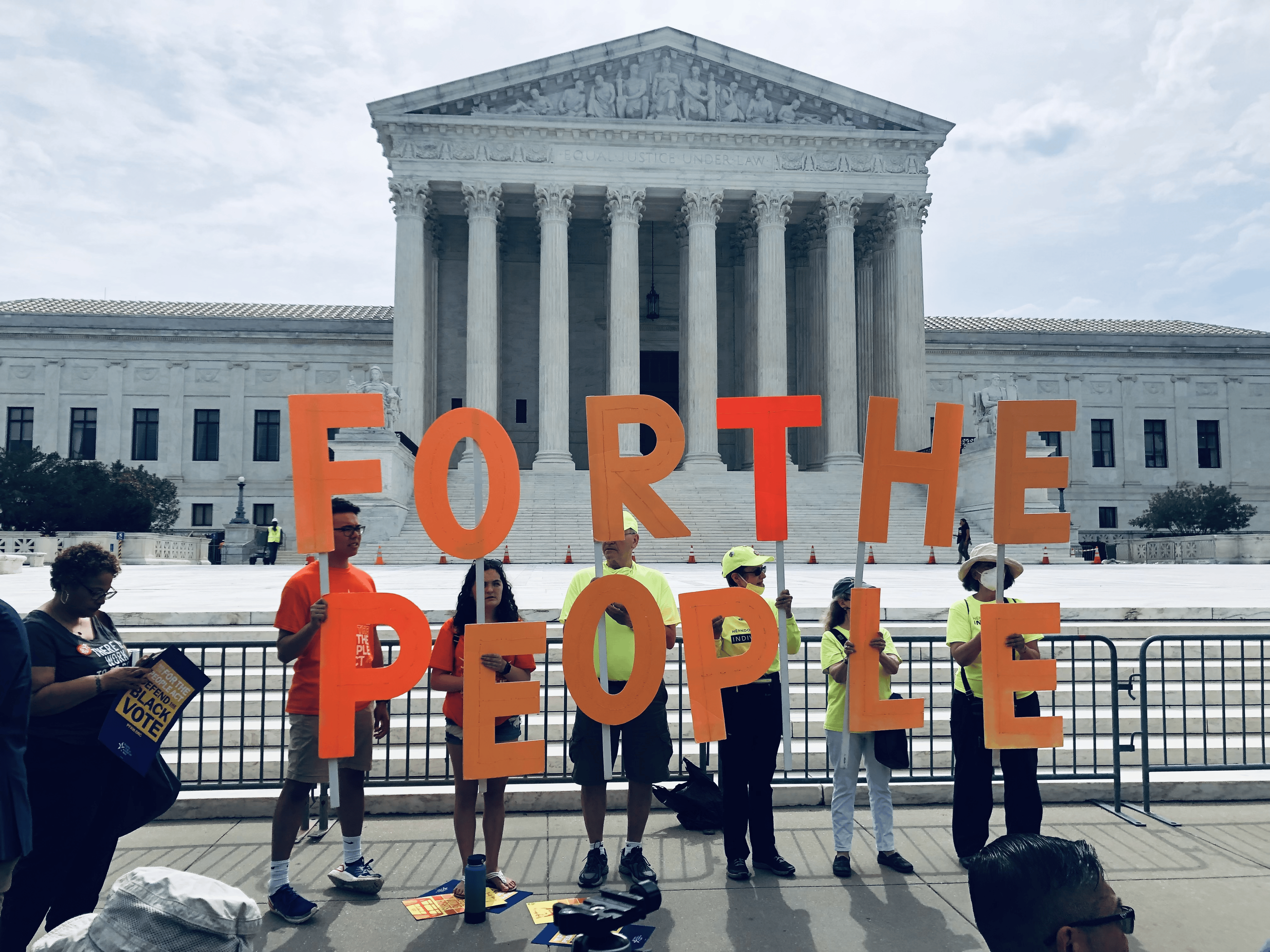
We have seen this throughout the Trump administration’s second term. The administration has targeted transgender service members in the name of military readiness. It has waged war on “DEI” and “gender ideology,” as if the presence of women, Black leaders, LGBTQ people or honest history were threats to national strength. It has rescinded long-standing protections that kept immigration enforcement away from houses of worship. It has forced religious communities into court to defend the basic freedom to gather, worship, shelter and serve without turning sanctuaries into hunting grounds.
And it has clashed not with one pope, but with two.
Pope Francis rebuked the administration’s mass deportation plans, warning that removing people purely because of their immigration status violates human dignity and “will end badly.” Trump’s border czar responded by telling him, in effect, to stay in his lane.
Then Pope Leo XIV, the first American pope, continued to press the moral issue. He has called for humane treatment of migrants and warned of a global spiritual and cultural crisis marked by violence, polarization and disregard for human rights. That is exactly the kind of faith this administration fears: not faith as decoration, not faith as a campaign prop, but faith as a moral check on power.
Authoritarian movements know that power is won not only through courts, elections and police forces, but through the stories people tell about who belongs. They tell us the nation is under threat. They tell us “real” citizens are being replaced. They tell us children, families, faith and tradition are in danger. They tell us a strong leader is needed to restore order.
Then they point to the people we are supposed to fear: migrants, LGBTQ people, feminists, racial minorities, religious minorities, journalists, judges, professors, protesters.
Once fear takes hold, exclusion begins to feel like protection. Cruelty is reframed as courage. Democratic opposition becomes betrayal. And the institutions that exist to protect pluralism — courts, universities, civil society, the press, houses of worship — become targets themselves.
This is not merely a culture war. It is a strategy.
The Pentagon’s faith-list purge is one more manifestation of that strategy. It sits alongside the attacks on transgender troops, the purge of DEI, the demonization of immigrants, the threats against universities, the intimidation of law firms, the assaults on judges, the attacks on journalists and the efforts to make churches afraid to shelter their neighbors.
The through-line is control: who belongs, who can serve, who can teach, who can protest, who can cross a border, who can receive care, which histories can be told, which religions are recognized and which forms of Christianity are acceptable.
The Freedom We Defend for Others
But faith, at its best, refuses that control.
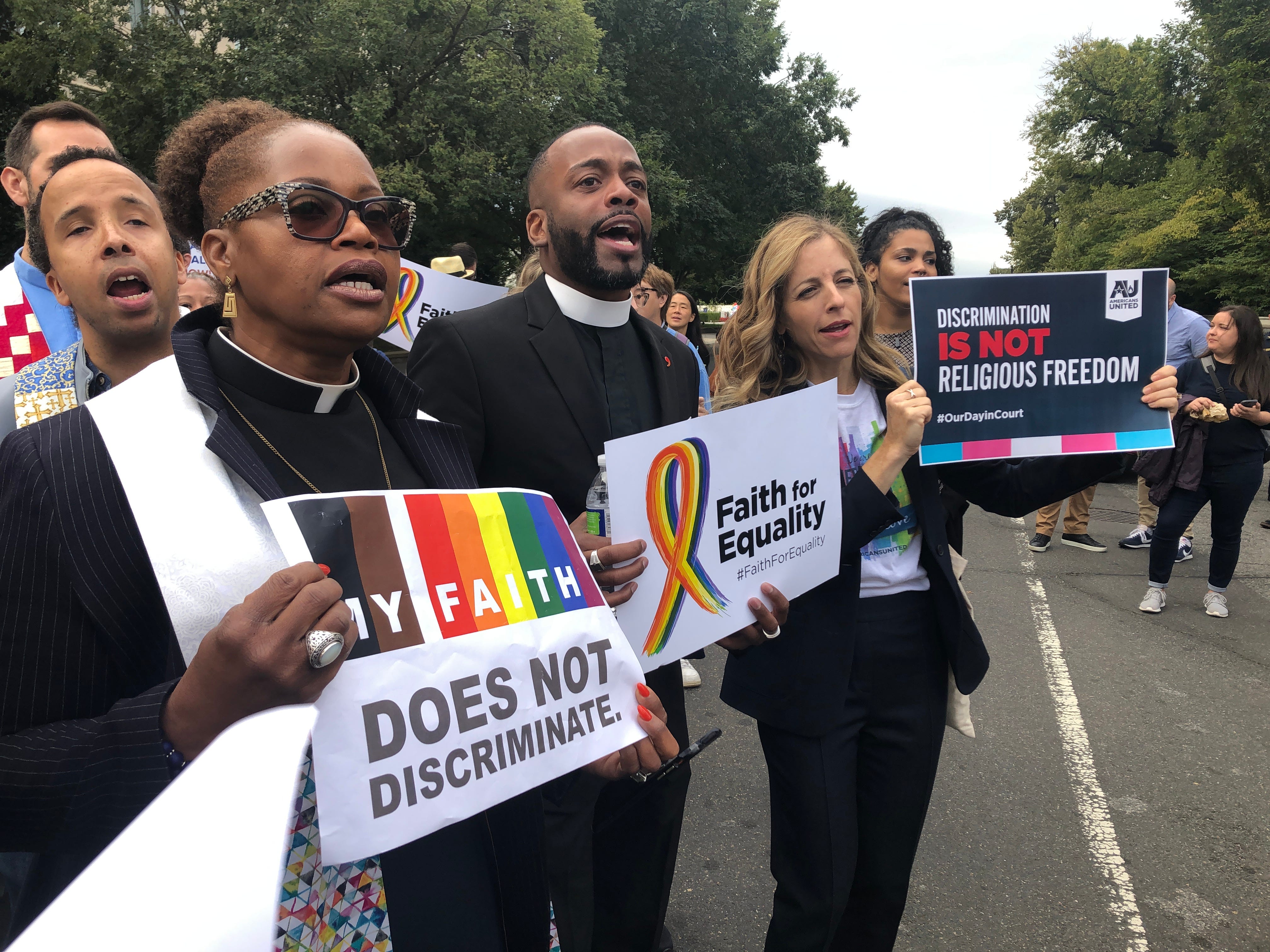
Faith says the image of God is not distributed by government category. Faith says the stranger is not disposable. Faith says the child at the border, the trans service member, the Muslim neighbor, the Jewish student, the atheist soldier, the pagan chaplain, the UU minister, the LDS family, the Catholic bishop, the Black officer, the immigrant mother and the frightened worshipper all belong to the circle of human dignity.
You do not have to be religious to care about this. Secular democracy depends on freedom of conscience too. A state that can control religion can control nonreligion. Pluralism is not a gift religious people extend to others. It is the ground on which all of us stand.
That is why we cannot wait until our own group is targeted to speak.
Latter-day Saints should defend Unitarian Universalists. Unitarian Universalists should defend Latter-day Saints. Christians should defend Muslims, Jews, Sikhs, Hindus, Buddhists, pagans, atheists and humanists. Secular people should defend religious liberty. Religious people should defend secular democracy.
The administration wants us isolated. It wants each community to calculate whether the latest attack really affects them. It wants progressive Christians to shrug when conservatives are slighted, and conservative Christians to shrug when progressives are erased. It wants secular people to see attacks on religious communities as someone else’s problem, and religious people to see attacks on atheists or humanists as no problem at all.
That is how rights disappear: one category at a time, while everyone else decides whether to care.
We must decide now that we care.
The Pentagon’s list may look like a bureaucratic footnote. It is not. It is a warning flare. When the government starts narrowing which faiths count, it is also narrowing which people count. And when any person’s dignity becomes negotiable, democracy itself is already in danger.
They eventually come for everyone.
So everyone must answer.
Thank you for posting this. I agree with you whole heartedly. Pete Hegseth version of Christianity is about power and exclusion; not about Jesus' teachings.
Thank you for expressing what many of us believe. With your permission, I'm republishing this post on United Methodist Insight.